Mike Mullane

About
Mike Mullane: Former NASA Astronaut | Author of Riding Rockets | Speaker on Safety, Accountability and Teamwork
Why Book Mike Mullane?
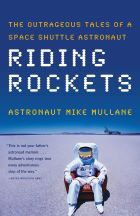
Mike Mullane helps organizations examine how everyday decisions can strengthen or weaken safety and teamwork. A former NASA astronaut and author of Riding Rockets, he draws on spaceflight and military aviation to explore responsibility in environments where mistakes can have serious consequences.
Mike’s stories make the pressure to accept shortcuts tangible. His presentations encourage people to question departures from established practice, speak up about concerns, and recognize their own contribution to the team’s operating culture.
Why Is Mike Mullane Right for Your Audience?
Mike is a strong fit for safety conferences, operational leadership meetings, engineering events, and high-reliability organizations. Consider him when speaking up and following through on standards are central priorities.
Book Mike when your audience needs to:
- Recognize gradual acceptance of unsafe shortcuts
- Speak up when something needs attention
- Strengthen personal responsibility for safety
- Understand how pressure affects decisions
- Support more questioning team conversations
- Keep operational standards visible in daily work
Audience Takeaways
Depending on the program selected, attendees will leave:
- Clearer on how small deviations can become routine
- Ready to raise a concern more deliberately
- More aware of their contribution to safety culture
- Equipped with questions about team decision-making
- Focused on a standard they need to reinforce
Keynote Programs
Countdown to Teamwork/Leadership/Safety
Mike uses spaceflight experiences to examine teamwork, leadership, and departures from safe practice. Ideal for operational and safety audiences.
Responsibility & Accountability
Mike explores the importance of speaking up and owning one’s contribution. Ideal for leaders and teams working in demanding environments.
Is Mike Mullane Right for Your Event?
Tell us about your audience, the operational responsibilities your audience carries and the safety behaviors you want to strengthen. We can help select Mike’s most relevant program, discuss customization, and confirm availability and fee.
Contact The Sweeney Agency 1-866-727-7555 or [email protected] for more information on this speaker.
Topics and Audience Takeaways
What Mike Mullane Talks About:
Courageous Self-Leadership
Most audiences are shocked to learn how ordinary Mullane was. People assume because he is an astronaut now, that in his youth, he was a super-child, destined for great success. That is not the case. Mullane uses slides and video to prove he wasn’t a child genius. He wasn’t a high school sports star. He didn’t date the homecoming queen. He wasn’t popular. Yet he realized a lifetime dream through the practice of self-leadership. Every individual and team has an “edge of a performance envelope”. That edge is much further out than individuals and teams realize and they find it through the practice of self-leadership.
Self-leaders set very lofty goals, accept the unchangeable, make mid-course corrections around obstacles and tenaciously remain focused on the goal. Mullane develops this philosophy of self-leadership: “Success isn’t a final destination. It’s a continuous life journey of working toward successively higher goals for yourself and your teams.”
“Countdown To Teamwork” is remarkably inspirational and humorous. The audience will come away from the program with a renewed sense of their potential and the potential of their teams.
Countdown To Teamwork/Leadership/Safety
Mullane uses the Space Shuttle Challenger disaster as an example of how a World-Class team can be victimized by incremental deviances from teamwork, leadership and safety best practices.
Challenger was a result of a catastrophic failure of the O-rings, Criticality 1 components used to form pressure seals between the four propellant-filled segments that comprise the twin solid fueled rocket boosters. Even though there were multiple instances of leaking O-rings in the 24 missions preceding Challenger, launches were never suspended to give engineers adequate time to address the problem. In hindsight, the serial justifications over a 4 year period to continue launch operations, reveal an incremental creep from best practices, i.e., a normalizing process. Challenger proved to be a ‘predictable surprise’. The following lessons will be extracted from the story of Challenger:
- Normalization of deviance is rooted in decision-making while under job-related or personal pressures. Everybody is vulnerable. Procedural compliance will always be the best defense. Make it a religion.
- Maintain situational awareness. Have a questioning attitude.
- Risk has no memory. Risk is not diminished by the frequency at which one is successful in taking the risk.
- Beware of this thought process, ‘These are exceptional circumstances. I must take the short-cut. Next time I will do it right.’ One successful safety short cut provides this false feedback: The absence of a negative consequence suggests a risk previously believed to be absolute is, in fact, manageable. One short-cut opens to door to more.
- Set challenging but attainable goals. NASA’s shuttle launch goal of 24 missions per year proved to be unattainable and pressures that resulted from that goal were significant factors in the tragedy.
Responsibility & Accountability
Mullane will introduce this discussion with a personal story from his USAF flying career. At the time of the story, Mullane was a very experienced Weapons System Operator from the backseat of the reconnaissance version of the F-4 Phantom jet fighter but making his first flight in a swing-wing, supersonic F-111 jet. Ultimately, he and the pilot had to make a last second ejection from the crashing jet. This crash was due to crew error…including Mullane’s failure to speak up at a critical moment in the flight. From this story he will develop these lessons:
- See something, Say something. Do something.
- We’re all in it together. In hazardous operations, the actions/inactions of a single individual can endanger everybody. Take each other’s back.
- One person with courage forms a majority. You count. You are unique. You might see something safety-related that nobody else sees. Never be a ‘safety passenger’ and assume somebody else will ‘take care of it.’
- Leaders: Empower your teams so everybody does count.
- We all contribute to the safety culture of a team and will be accountable for our contribution. In hazardous operations, you may not get a ‘do-over’. OWN your safety responsibility.
The Lighter Side of Spaceflight
In his program, The Lighter Side of Spaceflight, Astronaut Mike Mullane will take the audience on a uniquely revealing, captivating and hilarious space journey. Using spectacular video and slides he will answer everybody’s space questions: What does a shuttle launch feel like?…How does an astronaut deal with the incredible fear of launch?…How do you sleep, bathe, eat, drink, etc.?….What do you see from space?…And, of course, he will answer the top two questions that astronauts are ever asked:
Number 1: How does the space toilet work?
Number 2: Has he seen any UFOs or aliens?
The answers to these questions and many, many more are lavishly wrapped with inside, hilarious stories and supported with amazing video.
The audience will not only be thoroughly entertained by The Lighter Side of Spaceflight but will they will also find Mullane’s message on goal setting and achievement to be powerfully inspirational. Most audiences are shocked to learn how ordinary Mullane was. People assume, because he is an astronaut now, that in his youth, he was a super-child, destined for great success. That is not the case. Mullane uses slides and video to prove he wasn’t a child genius. He wasn’t a high school sports star. He didn’t date the homecoming queen. He wasn’t popular. (He shows a slide of the dedication pages from his high school year book…which are blank except for a single inscription: “You missed Korea but here’s hoping you make Vietnam”.)
Yet, Mullane realized a lifetime dream of becoming an astronaut through the practice of “mapping the edge of his performance envelope”. Every individual and team has an “edge of a performance envelope” and individuals and teams find those “edges” (as team member, leaders, parents, spouses, etc.) through self-challenge and tenacity. (Mullane’s father was rendered a paraplegic at age 33 by polio and Mullane’s story of his parents response to that tragedy while raising six children is the basis of his message on tenacity and goal-achievement in the face of adversity). Mullane develops this philosophy of self-leadership: “Success isn’t a final destination. It’s a continuous life journey of mapping our performance envelopes through challenge and tenacity.”
The Lighter Side of Spaceflight is remarkably inspirational and humorous. The audience will come away from the program with a renewed sense of their potential and the potential of their teams.
Recent Publications

I could not miss the opportunity to tell you how absolutely pleased, entertained and educated we were, by Mike Mullane’s talk to our group. I have been doing this a long time and I can not think of a better, more focused and “spot on” talk
Consumer Lending, US Bank


