Dr. Richard Peterson

About
Dr. Richard L. Peterson is an American behavioral economist and psychiatrist. He has developed behavioral finance-based quantitative models, imaged the brains of subjects play-trading, and is a frequent writer about social media sentiment. Peterson developed text mining software to identify and quantify economically predictive sentiments, and speaks widely in the areas of behavioral finance and social media analytics.
Dr. Peterson graduated from the University of Texas, with a BS cum laude in Electrical Engineering, a BA, and Doctor of Medicine degrees (M.D.). He performed postdoctoral neuroeconomics research at Stanford University, and is Board-certified in Psychiatry.
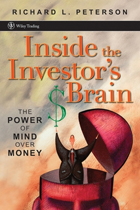
He founded and runs the sentiment analysis firm MarketPsych Data and ran the psychology-based quantitative asset management firm MarketPsy Capital. In the educational field he developed financial personality tests, published in academic journals and textbooks, and is an associate editor of the Journal of Behavioral Finance. In 2007, Peterson wrote the book Inside the Investor's Brain (Wiley), which translated behavioral finance concepts from academia to a lay audience. The book aggregated and reviewed research indicating that innate neurological influences predictably bias individual investor behavior. In 2016 he published Trading on Sentiment (Wiley), which explained quantitative research on media themes and sentiments that appear to drive asset prices in predictable patterns.
Topics and Audience Takeaways
What Dr. Richard Peterson Talks About:
Inside the Investor’s Brain – Unique insights into how the mind of an investor operates and how developing emotional awareness leads to long-term success
Richard Peterson’s presentation “Inside the Investor’s Brain” provides advisors with specific techniques for understanding their financial psychology, so that they can improve their own performance and learn how to outsmart other investors. Using stories, insights and science, Richard addresses various mental traps and how they play a role in investing. Through examples, such as a gambling experiment with playing cards, he show people how being aware of the subconscious can separate the smart investors from the average ones. This presentation also contains descriptions of the work of neuroscientists, financial practitioners, and psychologists, offering an expert’s view into the mind of the market. Innovative and accessible, Inside the Investor’s Brain gives investors the tools they need to better understand how emotions and mental biases affect the way they manage money and react to market moves.
MarketPsych: How to Manage Fear and Build Your Investor Identity
This presentation is an investor’s guide to understanding the most elusive (yet most important) aspect of successful investing – yourself.
Why is it that the investing performance of so many smart people reliably and predictably falls short? The answer is not that they know too little about the markets. In fact, they know too little about themselves.
Combining the latest findings from the academic fields of behavioral finance and experimental psychology with the down-and-dirty real-world wisdom of successful investors, Dr. Richard Peterson guide experienced investors through the psychological learning process necessary to achieve their financial goals.
In an easy and entertaining style the author makes complex scientific insights readily understandable and actionable, shattering a number of investing myths along the way. You will gain understanding of your true investing motivations, learn to avoid the unseen forces that subvert your performance, and build your investor identity – the foundation for long-lasting investing success.
Replete with humorous games, insightful self-assessments, entertaining exercises, and concrete planning tools, this presentation goes beyond mere education. MarketPsych: How to Manage Fear and Build Your Investor Identity functions as a psychological outfitter for your unique investing journey, providing the tools, training and equipment to help you navigate the right paths, stay on them, and see your journey through to success.
Trading on Sentiment: The Power of Minds Over Markets
In his presentation Trading on Sentiment, Richard takes you inside the science of crowd psychology and demonstrates that not only do price patterns exist, but the most predictable ones are rooted in our shared human nature. Richard Peterson’s team developed text analysis engines to mine data – topics, beliefs, and emotions – from social media. Based on that data, he put together a market-neutral social media-based hedge fund that beat the S&P 500 by more than twenty-four percent―through the 2008 financial crisis. In this presentation, he shows you how he did it and why it worked.
Applying algorithms to social media data opened up an unprecedented world of insight into the elusive patterns of investor sentiment driving repeating market moves. Audiences gain a privileged look at the media content that moves investors, along with time-tested techniques to make the smart moves―even when it doesn’t feel right. This presentation digs underneath technicals and fundamentals to explain the primary mover of market prices – the global information flow and how investors react to it. It provides the expert guidance you need to develop a competitive edge, manage risk, and overcome our sometimes-flawed human nature. Learn how traders are using sentiment analysis and statistical tools to extract value from media data in order to:
- Foresee important price moves using an understanding of how investors process news.
- Make more profitable investment decisions by identifying when prices are trending, when trends are turning, and when sharp market moves are likely to reverse.
- Use media sentiment to improve value and momentum investing returns.
- Avoid the pitfalls of unique price patterns found in commodities, currencies, and during speculative bubbles
Trading on Sentiment deepens your understanding of markets and supplies you with the tools and techniques to beat global markets― whether they’re going up, down, or sideways.
Recent Publications